Last updated November 23, 2026
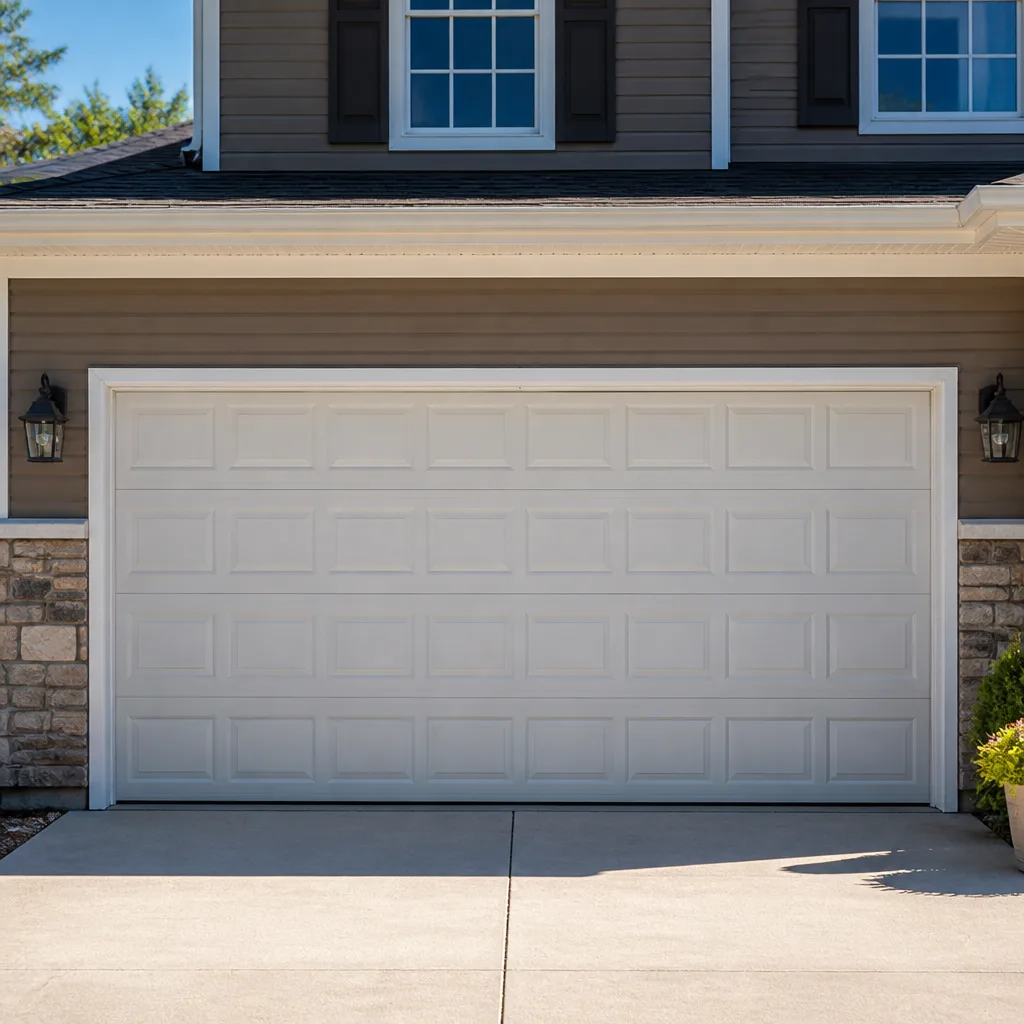 Raised-panel steel
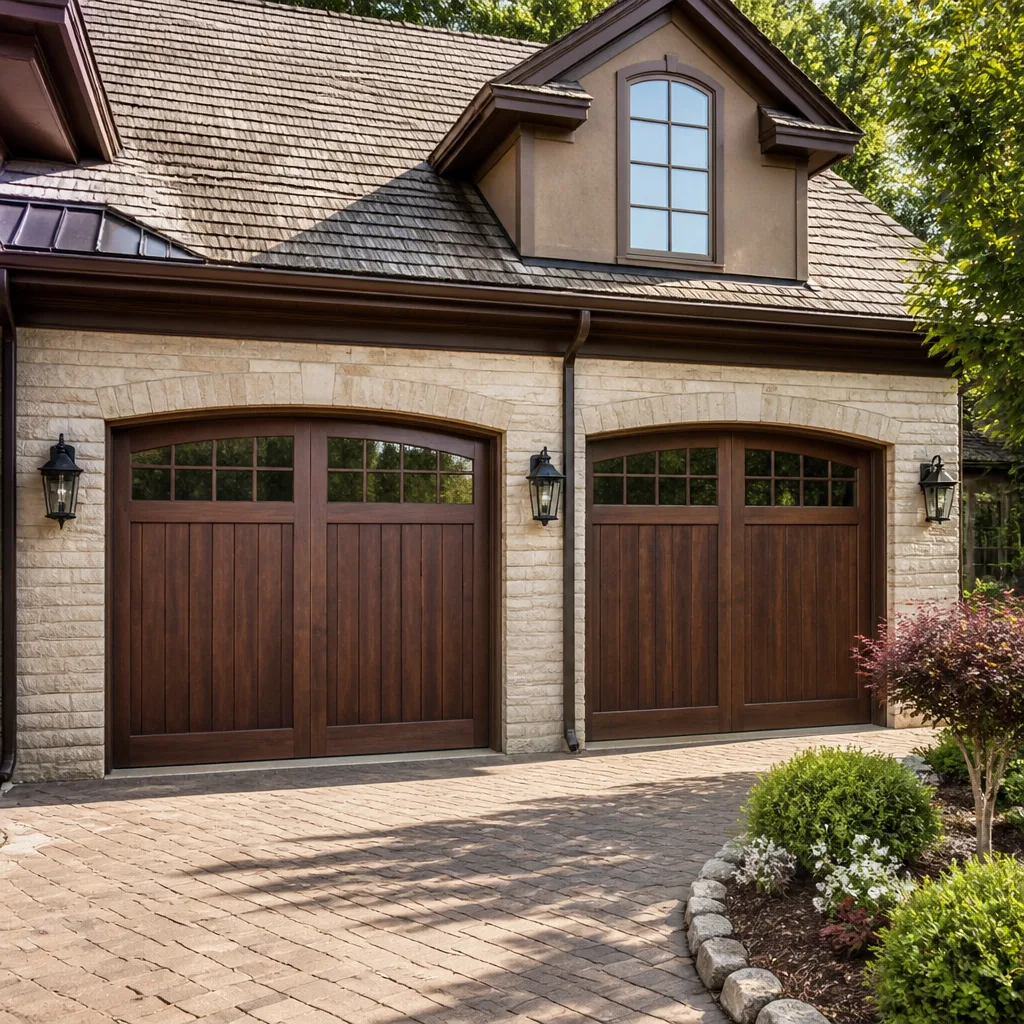 Carriage house
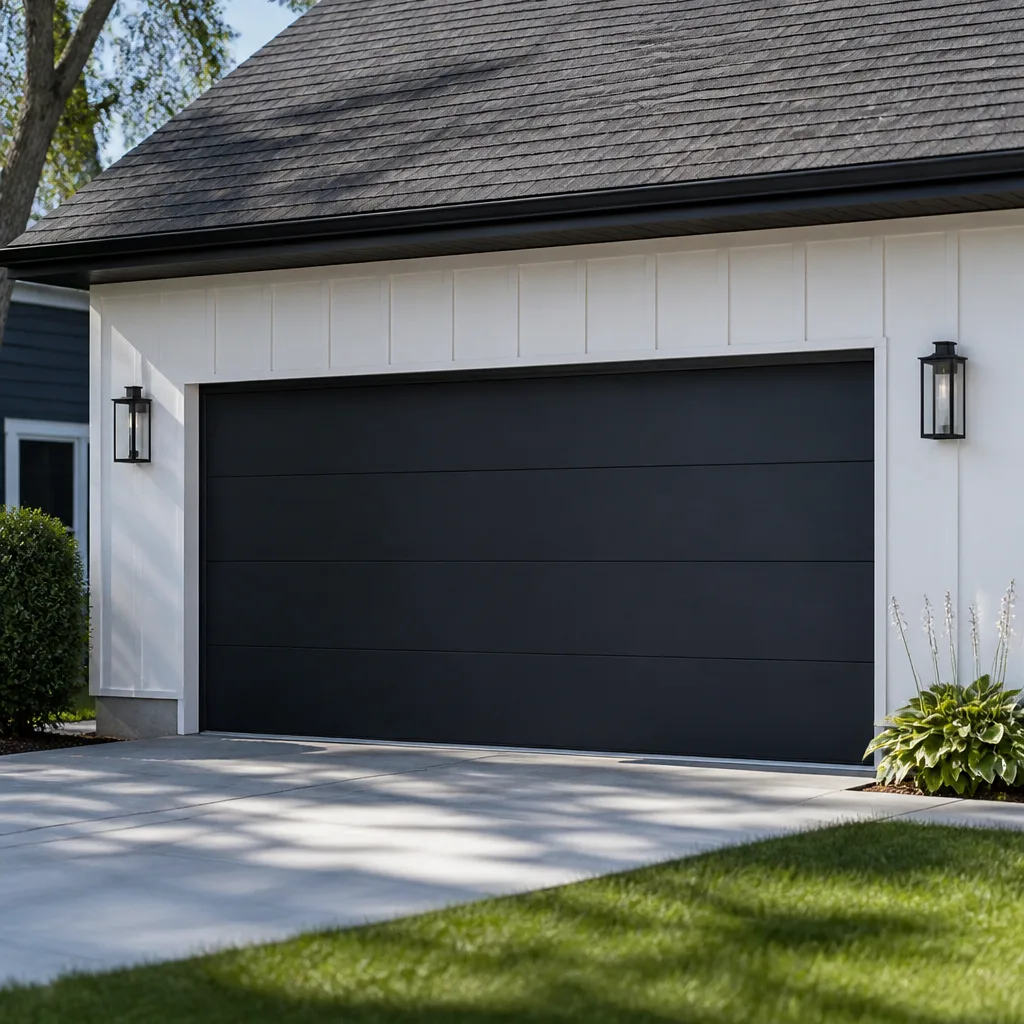 Modern flush
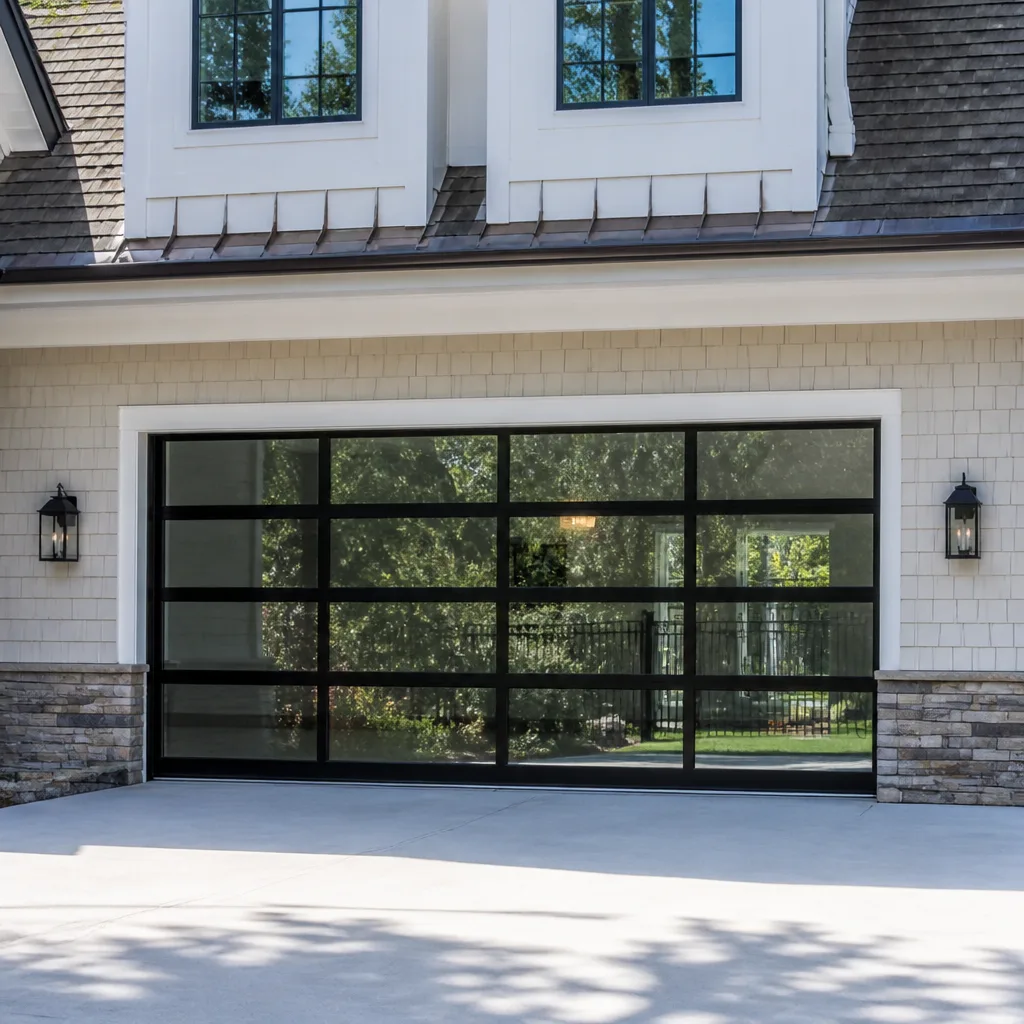 Full-view glass
 LiftMaster openers
 Chamberlain openers
Full 25-point door and opener safety check with every visit - springs, cables, rollers, tracks, and your LiftMaster or Chamberlain opener included
You get a price before we start. It does not change when the pro arrives.
Get your free estimateGarage Door Warning Signs: A Kendall Homeowner’s Reference Guide
Most garage door warning-sign articles start with “the door won’t open.” By the time a door won’t open, you’ve usually missed six months of quieter signals that would have told you exactly what was about to fail. A garage door that hesitates for half a second before it moves is not warming up. That pause is a torsion spring shedding tension, and in Kendall’s humidity the slide from a small hesitation to a full failure can run its course in under 60 days. In this guide we’ll walk through the early signals, what each one points to, and how to tell which ones mean “call now” versus “call on Monday.”
Quick Answer
The most common early garage door warning signs are a half-second hesitation before the door moves, grinding or popping sounds, rust that has moved from surface film to pitting, and an opener that reverses without reason. Each of these maps to a specific failing component – spring, roller, track, or opener logic board – and most get cheaper to fix the moment you notice them. If your door makes a sharp popping noise near the top or hesitates more than a second, stop using it and call a professional.
Styles & brands we work with
- Raised-panel steel
- Carriage house
- Modern flush
- Full-view glass
- LiftMaster openers
- Chamberlain openers
Table of Contents
- The Sound Diagnostic Matrix: Grinding vs. Popping vs. Squealing vs. Rattling
- The Slow Door Diagnostic: Spring, Opener, or Track?
- Reading the Rust: Surface Oxidation vs. Pitting vs. Structural Corrosion
- Opener Behavior Flags by Brand
- Visual Checks You Can Do in Five Minutes
- Emergency vs. Schedule-It Triage: What to Call About at 10 p.m.
- Why Kendall Humidity Accelerates Certain Failures
The Sound Diagnostic Matrix: Grinding vs. Popping vs. Squealing vs. Rattling
Your ears are the most sensitive diagnostic tool you own. A garage door is a mechanical system with about a dozen moving contact points, and each produces a different sound when it starts to fail. Generalist handymen tend to lump every noise under “needs lubrication.” That’s a mistake, and it’s why the same door gets greased five times before someone finally replaces the roller that was actually grinding.
Here’s how we map the four primary sounds to their root causes:
- Grinding – a low, continuous scrape as the door travels. Almost always a roller with a worn bearing, or a bent hinge bracket scraping the track. Usually hurts nothing else if caught early. If left alone, the grinding roller transfers stress to the hinge and the track.
- Popping – a sharp snap, often just as the door begins moving or about halfway up. Popping points to torsion spring issues or a cable that has slipped its drum. This is the sound that should stop you in your tracks. Do not keep running the door on a popping spring.
- Squealing – a high-pitched whine that follows the door’s motion. Usually a dry bearing in a roller or a hinge pin that has lost grease. Fixable and low-risk, but persistent squealing grinds metal against metal over time.
- Rattling – a loose, jittery noise from the door itself, sometimes long after the door has stopped. Often loose panel hardware, a sagging panel, or a track that has loosened from the frame. Left alone, rattling doors gradually misalign.
In Kendall, the humidity means bearings stay wet longer and grease breaks down faster than it would in drier climates, so squealing and grinding show up earlier in a door’s life. If you hear any of the four for more than a week, it’s worth a diagnostic. The two that mean stop are popping and any sound accompanied by visible door sag or a door that hangs partway.
The Slow Door Diagnostic: Spring, Opener, or Track?
A door that moves slower than it used to has one of three problems, and they are not interchangeable. A torsion-spring issue requires spring work. An opener force-setting drift requires opener adjustment. Track friction requires cleaning or realignment. Greasing the wrong one wastes time and can mask the real issue long enough for it to get expensive.
- Test the disconnect. Pull the red emergency release handle (usually with a helper holding the door) and try to lift the door manually. If it’s heavy or won’t stay near the halfway point, the spring is losing tension. If it lifts smoothly by hand but is slow when connected, the opener is the problem. If it’s stiff or binds at one spot in the travel, the track is the problem.
- Check the spring. Look up at the torsion spring above the door. A healthy spring is tight and even. If it looks stretched, uneven, or has an obvious gap, it’s lost tension. Never touch the spring or its winding bars yourself. Torsion springs are under extreme tension and can cause serious injury, which is why spring work belongs with a trained professional.
- Look at the opener force setting. On most openers (LiftMaster and Chamberlain included) there’s a force adjustment dial or menu item. If someone nudged it, the door slows down or reverses unexpectedly. This is a logic fix, not a mechanical one.
- Inspect the track. Run your fingers along the inside of the vertical and horizontal tracks. Any roughness, flat spot, or debris means the rollers are fighting the track. A door that binds at the same spot every time is almost always a track issue.
In our experience, on a door older than about ten years in Kendall’s climate, hesitation is nearly always the spring. Damp air, small temperature swings, and near-daily use add up. If you’d rather skip the guessing game, our garage door repair team runs this same three-part diagnostic onsite.
Reading the Rust: Surface Oxidation vs. Pitting vs. Structural Corrosion
Rust is a timeline. On a garage door in Kendall it can mean anything from “wipe it down and move on” to “this panel has to be replaced.” The difference is in the pattern, not the color.
Surface oxidation is a light, orange-brown film on painted steel at panel seams, screw heads, and the bottom edge. It wipes off with a rag and reveals intact paint. Left alone for a few seasons, it progresses slowly. In Kendall’s humidity, surface oxidation that goes untreated can turn into the next stage within roughly a year. Clean and touch up the paint and you’ve reset the clock.
Pitting is where the metal has started to flake and you can feel small depressions with a fingertip. Once a door reaches this stage, painting only buys time – the structural layer underneath is already weakening. In our experience, pitting on the bottom panel typically appears 3 to 5 years after untreated oxidation in this climate. Bottom panels catch the most humidity because they sit closest to the ground.
Structural corrosion is visible as holes, flaking that reveals the inner steel layer, or a panel that flexes or sags when you press it. Aluminium doors skip rust but corrode at seams in the form of white chalky deposits. Steel doors with structural corrosion need panel replacement, not repair.
Here’s the shortcut: if the rust wipes clean with a rag and the paint underneath looks solid, it’s early-stage. If your fingertip catches on the rust, it’s mid-stage. If you can see daylight or the metal flakes off in chips, the panel needs to be replaced. Clopay and Amarr panels we service show these stages at similar rates, so the brand isn’t the driver – the exposure is.
Opener Behavior Flags by Brand
Every opener has quirks that show up as “warning signs” long before a hard failure. Knowing which quirk belongs to which brand is what separates a trained diagnostic from a guess.
LiftMaster and Chamberlain auto-reverse sensitivity drift
LiftMaster and Chamberlain openers (they share the same platform) rely on a photoelectric safety reverse system. When the lenses get dusty – and in Kendall’s humidity, dust sticks longer to plastic – the auto-reverse can trigger without an obstruction. If your door reverses itself without anything in the way, clean the lenses first. If it still reverses, the safety sensor sensitivity needs adjustment. Do not override the sensors to “fix” it; that defeats a safety system.
Genie limit switch creep
Genie openers use a limit switch to tell the motor where “fully open” and “fully closed” are. Over time, the switch can creep a little. The sign is a door that stops slightly short of fully closing, or opens a little too far and bangs the stop. It’s a small adjustment, not a motor replacement – but if you ignore it, the creep continues and eventually the opener’s logic board starts throwing errors.
Chamberlain WiFi dropout patterns
Chamberlain’s MyQ WiFi openers lose connection periodically. Sometimes it’s your router. But a pattern where the opener disconnects specifically after power flickers or after the door runs long suggests the opener’s logic board. If your door works fine from the wall button but the app says “offline” for over a week, the board may need attention.
These quirks are why we ask which brand you have before we arrive. LiftMaster, Chamberlain, Genie, Clopay, Amarr, Wayne Dalton, Craftsman, and Raynor each behave differently, and a technician who’s seen the pattern before diagnoses it right the first time. If your opener is the issue, garage door opener repair covers all of those brands.
Visual Checks You Can Do in Five Minutes
You don’t need tools to spot most early warning signs. This is the inspection we suggest to every Kendall homeowner we talk to, monthly:
- Look at the door as it opens. Stand back and watch the door’s line. Does it move in a straight line, or does one side lag? A door that tilts means one side of the spring or cable is going.
- Look at the gaps between panels. If you can see uneven gaps between section panels when the door is down, a hinge or panel connector is straining.
- Check the weather seal at the bottom. A torn, flattened, or missing bottom seal lets humidity in. In Kendall, that’s the fastest path to bottom-panel rust.
- Open the door halfway and stop it. Does it hold its position without drifting? A door that slowly creeps down is losing spring tension. A door that drifts up is also spring-related.
- Push test the safety reverse. Put a small object (a piece of wood or an empty box) in the door’s path and press close. The door should reverse. If it doesn’t, call us – a door that won’t reverse on obstruction is a serious safety hazard, especially with kids or pets around.
If any of the above fails twice in a row, it’s time for a professional diagnostic. Our team at Kendall Garage Door Repair Pros runs this same checklist at the start of every service visit.
Emergency vs. Schedule-It Triage: What to Call About at 10 p.m.
Not every warning sign is a 10 p.m. call. Triage saves you money and lets the technician come prepared. Here’s how we sort signal from noise:
Call now – do not run the door again
- Any sharp popping sound or a snapping noise near the spring.
- The door is visibly sagging, tilted, or hanging partway.
- A broken spring (you’ll see a gap in the coil above the door).
- A cable that has jumped its drum or is visibly frayed.
- The door has come off the track.
- The door is stuck open, leaving your home or garage exposed.
- The door won’t reverse on obstruction and someone could get hurt.
Schedule within the next few days
- Squealing, grinding, or rattling that’s recently started.
- An opener that occasionally acts up but still opens the door.
- Rust that’s moving past surface stage.
- A door that hesitates for under a second.
- Weather seal damage.
Spring, cable, and door-off-track issues are all in the call-now category because they involve extreme mechanical tension or a real security gap. A failed door is a security system failing, not just an inconvenience. If you’re facing an emergency, garage door spring repair is the service you’re likely to need. We offer emergency service for exactly these situations.
Why Kendall Humidity Accelerates Certain Failures
Kendall’s climate matters to your garage door more than most homeowners realize. Winters here are mild, so we don’t see the cold-weather strain that drives spring fatigue up north. What we do see is humidity year-round, and humidity is the slow-burn failure driver.
Three things happen to a garage door in this climate:
- Bearings dry out faster. Roller and hinge grease absorbs moisture from the air and breaks down. Where a dry-climate door might go three years between lubrications, a Kendall door benefits from lubrication twice a year. That’s not marketing – it’s the moisture exposure curve.
- Spring steel stays slightly wet. Torsion springs don’t rust to the point of failure quickly, but surface oxidation on spring coils absolutely happens over time, and oxidation weakens the coil at its stress points.
- Bottom panels get the double hit. Ground moisture plus air humidity means the bottom panel of your door is exposed to more moisture than any other part. That’s why bottom-panel rust is the most common panel complaint we get in Kendall.
None of this is exotic. It’s just what the climate does to a mechanical system with painted steel and greased bearings. A door that’s maintained twice a year in Kendall gets roughly the same lifespan as a door maintained once a year in a drier city.
Common Mistakes to Avoid
- Guessing that every noise means “needs grease.” Greasing a failing bearing doesn’t fix the bearing. Greasing a torsion spring does nothing at all. Match the sound to the actual component or you’ll waste money on lubricant and lose weeks of warning time.
- Overriding safety sensors. A door that reverses for no reason is usually a dirty sensor, not a broken safety system. Do not tape over, bypass, or zip-tie a sensor out of the way. That’s a real injury risk, and a technician will have to undo it anyway.
- Ignoring hesitation because the door “still works.” A door that hesitates before moving is not warming up. In Kendall’s humidity, hesitation from spring fatigue can escalate to a full break in under 60 days. Catch it at the hesitation stage and the repair is a spring adjustment, not a spring replacement plus panel damage.
- Painting over pitting rust. Paint on top of flaking rust hides the failure but doesn’t stop it. Prep, treat, and prime the metal first, or the next round of rust emerges in weeks.
- Self-adjusting opener force settings. Force adjustments on LiftMaster, Chamberlain, and Genie units are meant to compensate for door weight changes, not to force a slow door to move. Raising the force setting masks the real problem and strains the motor.
- Ignoring the “it stopped 2 inches short” behavior. A door that keeps just missing fully closed is usually a creeping limit switch. Adjusted early, it’s a quick fix; ignored for months, it damages the opener’s logic board.
- Calling a general handyman for spring work. Torsion springs are under extreme tension and can cause serious injury when mishandled. A spring tech does this every week; a generalist does it once. There’s no safe middle ground. If the spring is the issue, use a specialist.
See the difference
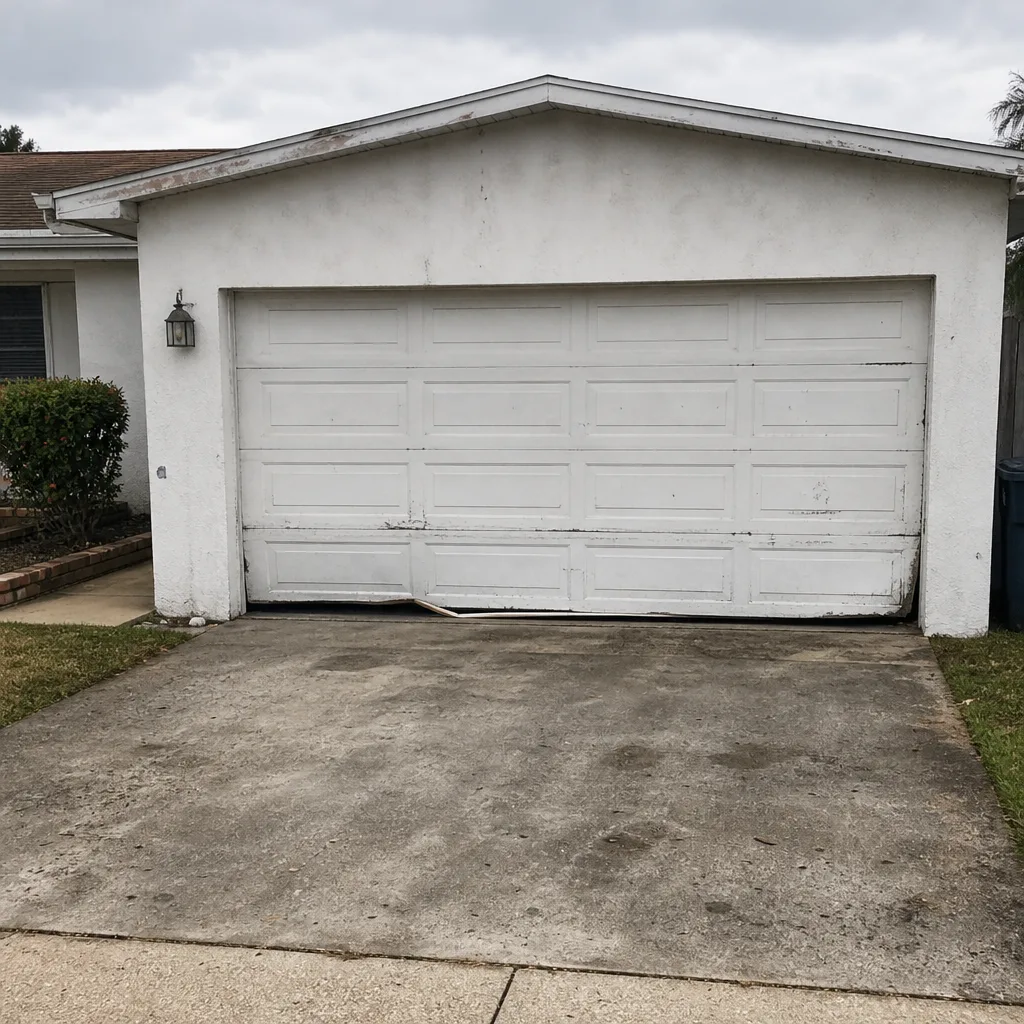 Before
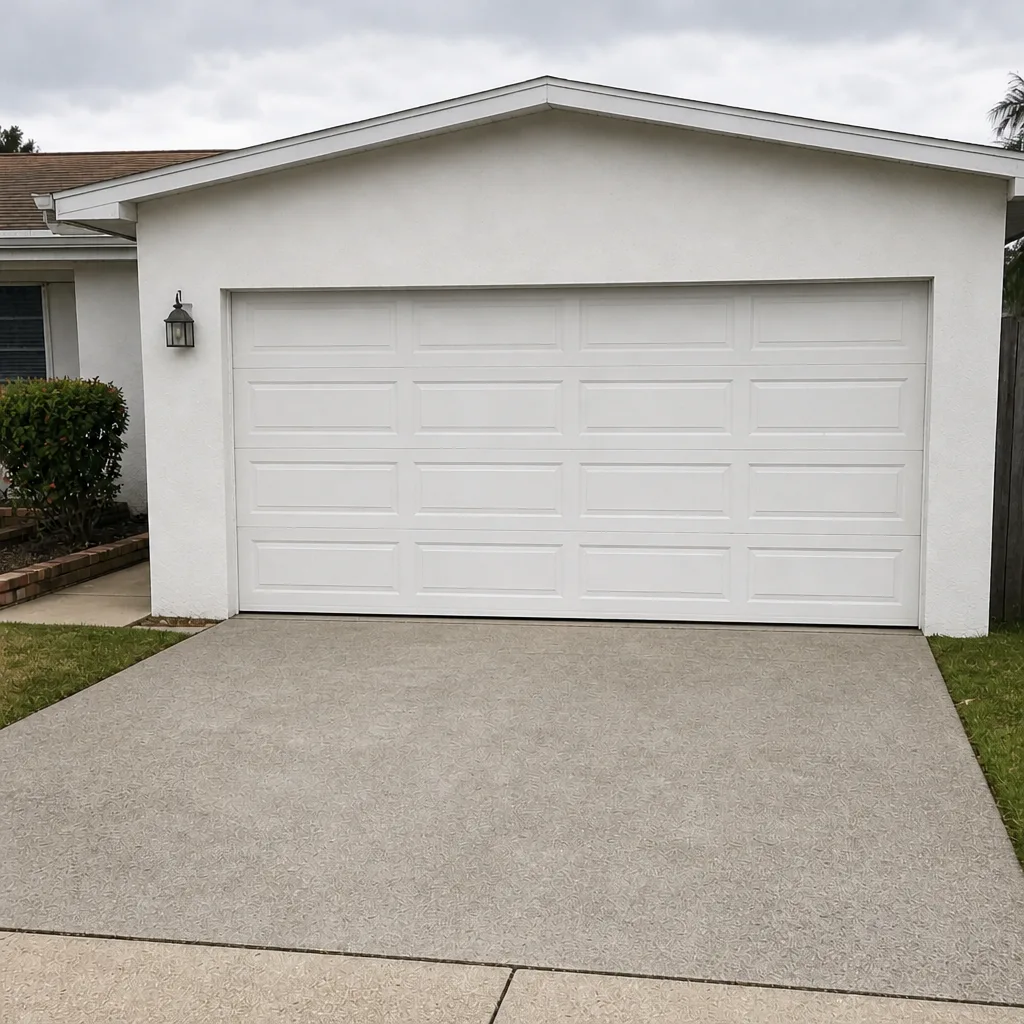 After
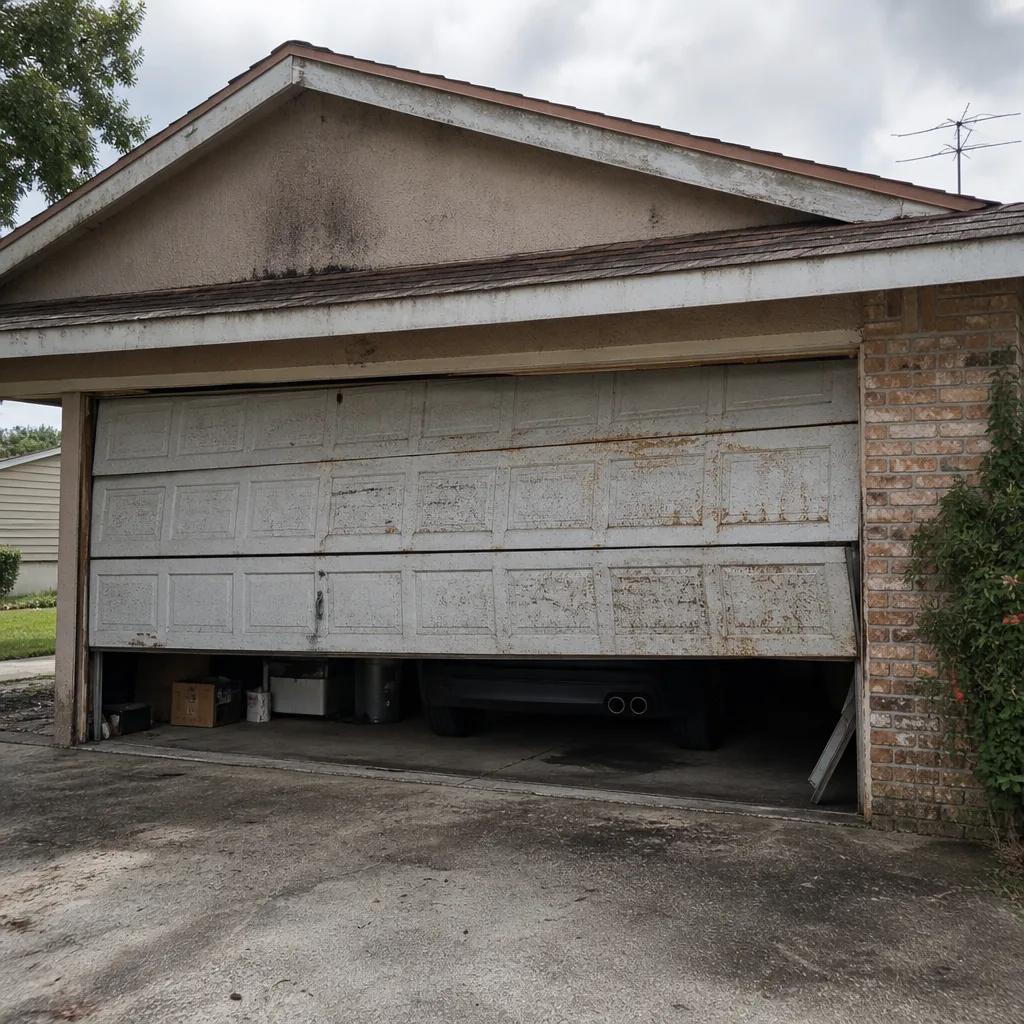 Before
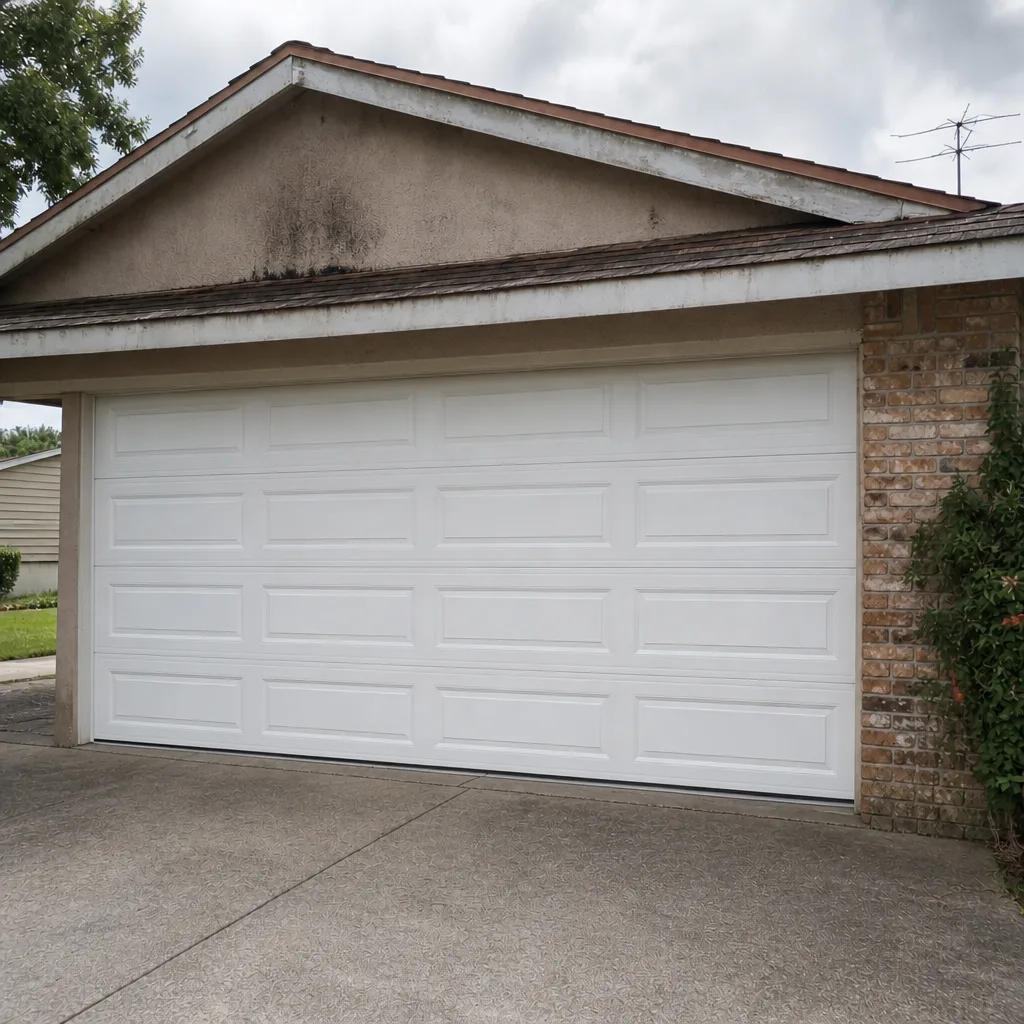 After
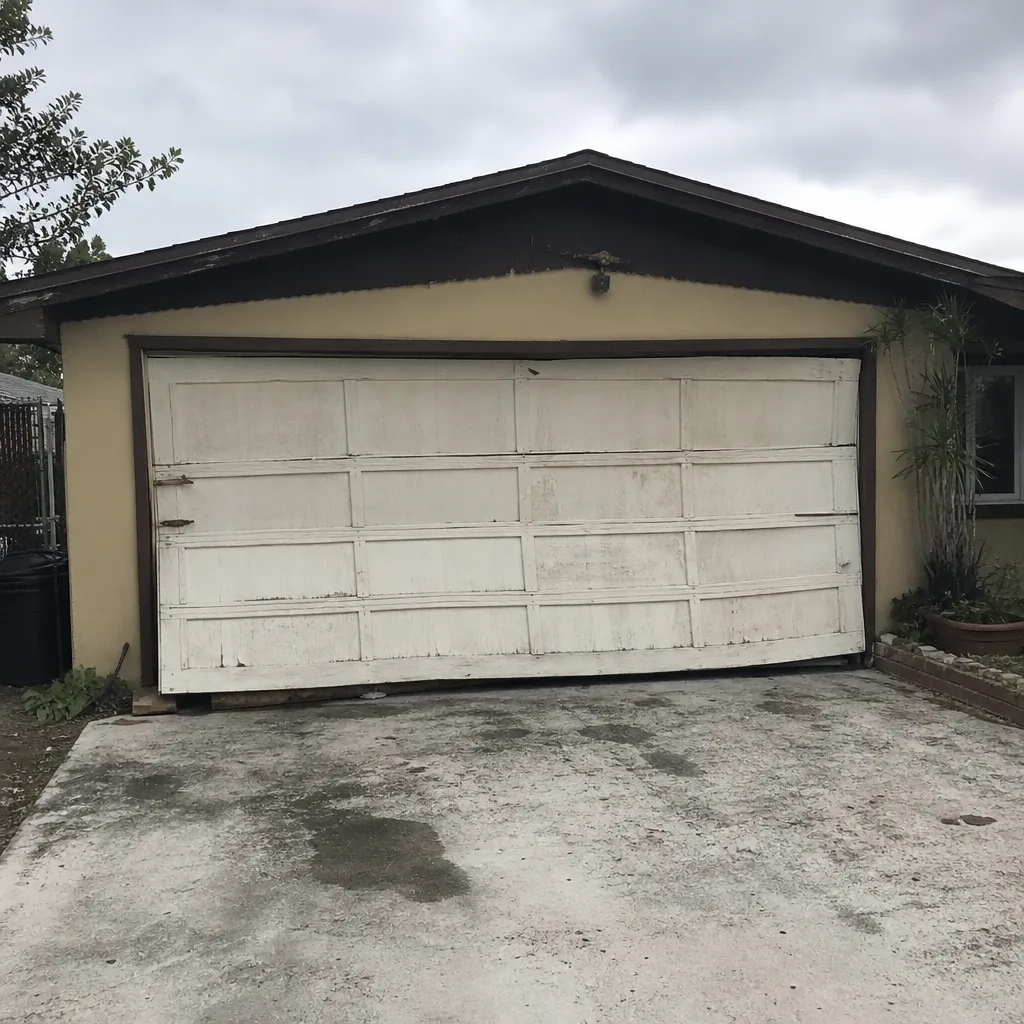 Before
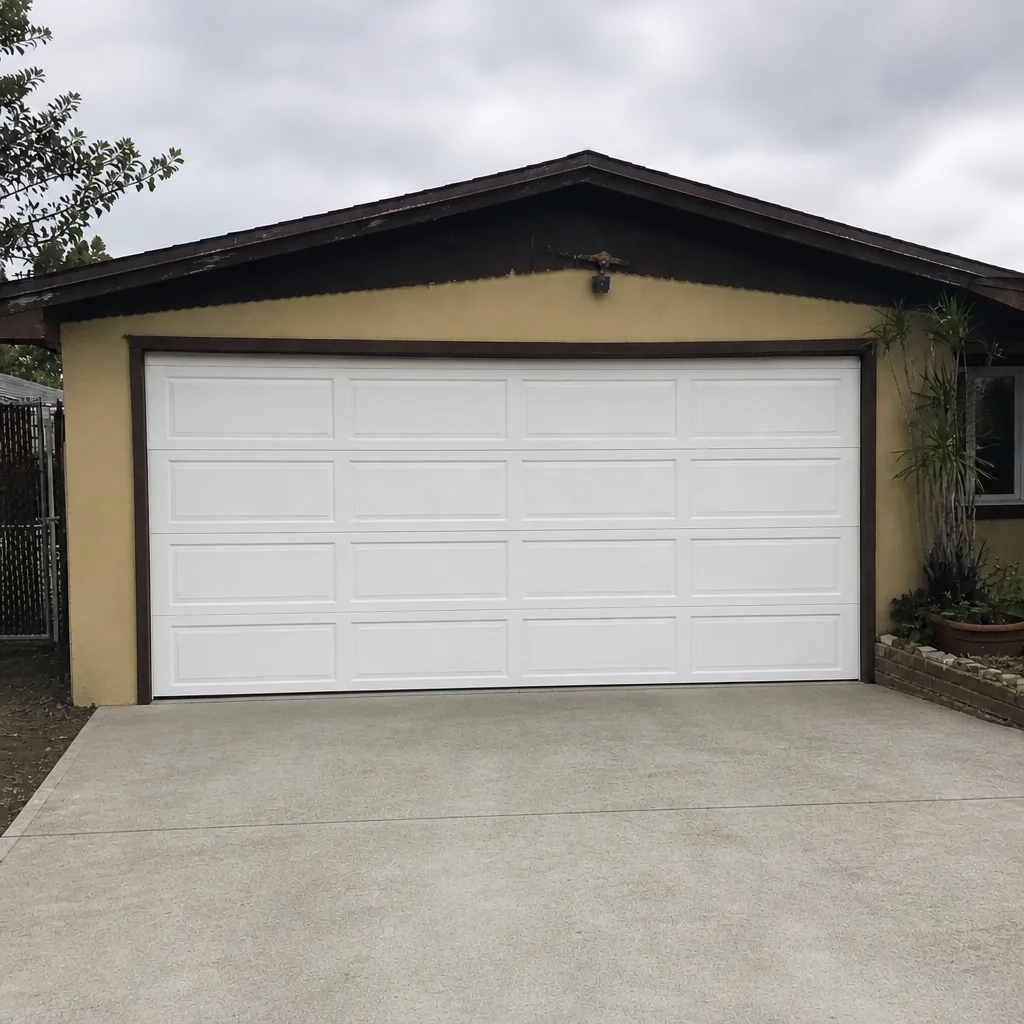 After
When to Call a Professional
Call us when the door pops, sags, hesitates more than a second, or has come off the track. Call us when the opener’s safety reverse fails the push test, when the spring looks stretched or has a visible gap, or when you’re suddenly lifting the door by hand because the opener can’t. Call us if your weather seal is torn and the bottom panel is showing pitting, because that’s the point where a repair is still cheap. And call us if you have no idea what’s wrong but you hear something new. Kendall Garage Door Repair Pros offers free estimates in Kendall – call (833) 508-9893. Our technicians have up to 12 years of experience across LiftMaster, Chamberlain, Genie, Clopay, Amarr, Wayne Dalton, Craftsman, and Raynor systems.
Frequently Asked Questions
The earliest are a half-second hesitation before the door moves, light rust on the bottom panel, and a new squealing or grinding sound that starts quietly and gets louder over a few weeks. Popping, sagging, and door-off-track are later signs. Catch the first three and most repairs stay in the diagnostic-plus-adjustment range. Call (833) 508-9893 for an exact quote if you’re past the “wait and see” stage – estimates are free.
A pause before the door opens means the torsion spring is losing tension and the opener has to overcome more weight at the start of travel. In Kendall’s humidity, that progression from a half-second pause to a full spring failure can happen in under 60 days. Don’t run the door repeatedly on a hesitation – have the spring checked.
Popping is worse. Grinding usually means a worn roller or a hinge scraping the track, which is low-risk if caught early. Popping points to a torsion spring problem or a slipped cable, both of which involve extreme tension and should stop the door until inspected. If your door pops, call (833) 508-9893 and don’t run the door in the meantime.
No. Torsion springs are under extreme tension and can cause serious injury when mishandled, even to experienced DIYers. A garage door spring repair should be done by a trained professional with the right winding bars and safety equipment. Our technicians handle spring repair routinely. Call (833) 508-9893 for a free estimate.
Twice a year is the sensible interval in this climate. Humidity breaks down bearing grease and drives bottom-panel rust faster than in drier parts of the country, so a door on a twice-yearly check gets roughly the same lifespan as a door serviced once a year in a drier city. If you’ve never had the door looked at, calling for a first diagnostic is worth it. Call (833) 508-9893 for a free estimate.
It depends on which sign you’re seeing. Popping, sagging, off-track, or a door that won’t reverse on obstruction are call-now signs. Squealing, grinding, rattling, surface rust, and occasional opener quirks are schedule-it signs you can book for the next few days. When you’re unsure, call (833) 508-9893 and describe what you’re hearing and seeing – we can tell you whether to stop using the door or wait.
The local pro is licensed and insured as Florida requires. Our team connects you with vetted local professionals, and the written estimate sets the final price you’ll pay – quoted and agreed before any work starts. Call (833) 508-9893 for a free estimate.
No. The written estimate is the price. We quote in advance, and if the diagnostic reveals something beyond the original scope, we discuss it with you and get your approval before doing any additional work. You’ll never be billed more than what you agreed to. Call (833) 508-9893 for a free estimate.
The Bottom Line
The expensive garage door failures don’t start with a door that won’t open. They start with a door that hesitates, a sound that’s slightly different, or a rust spot that wipes clean one month and pits the next. Kendall’s humidity accelerates that timeline, so the early signals matter more here than in drier climates. Match the sound to the component, watch the bottom panel, test the safety reverse monthly, and triage honestly – call-now signs go to the phone, schedule-it signs go to the calendar. If you’re ever unsure, that’s the call. Kendall Garage Door Repair Pros offers free estimates in Kendall – call (833) 508-9893. Springs, openers, panels, and full installs – one call covers it all.
Written by the team at Kendall Garage Door Repair Pros.